






Export of raw materials no longer fancy says President Hichilema
RTSA registers over 50,000 motorcycles.
Mopani operations at Nkana, Mufulira suspended over safety breaches
Why Zambia Verifies Qualifications: Understanding ZAQA’s Mandate
ZRA seizes US$145,000 in Gatbro raid
Man found dead in lodge after night out with woman, police say
Police arrest five over alleged harassment, defamation on journalist abduction claims.
Zambians mourn 12-year-old shot dead in Canada school shooting
Woman charged with child stealing after DNA test excludes her as mother.
UNZA student injured by motorist while crossing the road
‘Zambian elections have never had a proven case of pre-marked ballot papers,’ says ECZ Chief Electoral Officer Brown Kasaro
President Hakainde accords late first female minister official funeral.
DPP files court documents against Lillian Mutambo via DHL
ACC clarifies status of Lusambo properties.
Zambia’s first female cabinet minister Mutumba Bull dies at 88
Mkushi cop shoots self, dies
Man found dead in lodge after night out with woman, police say
Police warn motorists against fleeing accident scenes.
Police officer dies, musician General Ozzy injured in Monze road accident.
Police arrest five over alleged harassment, defamation on journalist abduction claims.
Gunmen rob Mufulira Wanderers more thank K180,000 in gate takings
Power Dynamos boost quarterfinal hopes with Berkane win.
Power Dynamos back in business
Zesco United suffer elimination
Lusaka Fitness Squad’s heartwaring initiative raises K63,015 for National Heart Hospital, supporting child-friendly facilities and resources.
1xBet Christmas Road Show is where your dreams come true!
Time to Win Big – Megapari is officially in Zambia!
Megapari Joined the Celebration at the Nc’wala Ceremony in Zambia
22Bet Zambia: Sculpting the Future of Sports and Casino Gaming
Discover the King of DRAG with 1XBET
Published
on
By
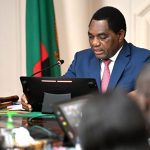
PRESIDENT Hakainde Hichilema says African countries are no longer keen on exporting raw materials but want value addition to what they produce.
The President says the African continent is now awake and leaders are ‘speaking one language.’
“I’m just from the AU and we are speaking one language now, that we cannot continue exporting raw materials for centuries.
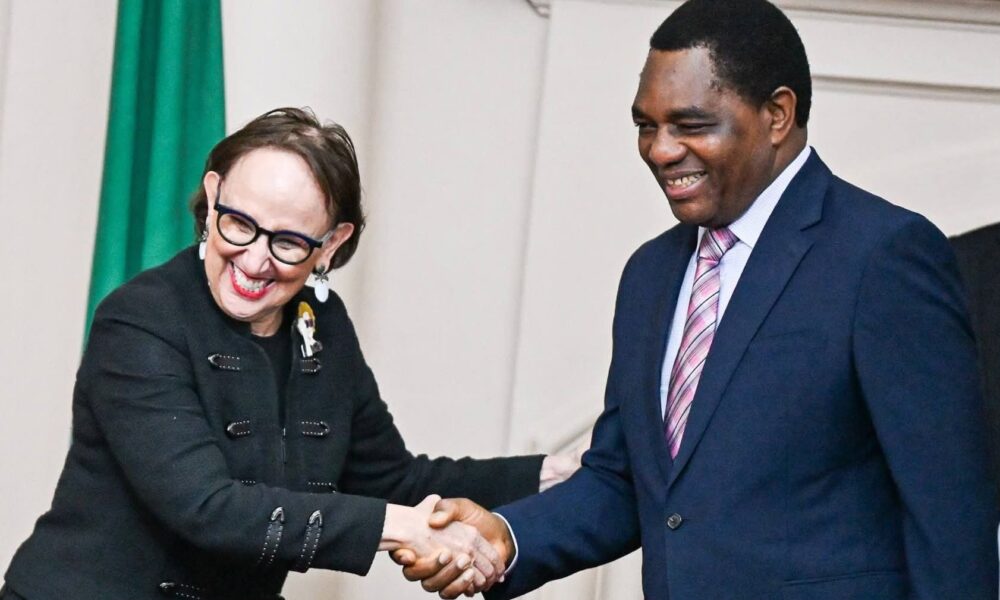
“We will not and we don’t want those discussions. We want discussions that will lead us into responsible resource extraction, processing, value addition. That will add growth to our economies for jobs and business opportunities and treasury revenues,” President Hichilema said during a bilateral meeting with UN Trade and Development (UNCTAD) secretary general Rebeca Grynspan at State House yesterday.
The President said time is now for Zambia to advance conversations with UNCTAD beyond traditional partnerships.
“We would like to see more harmonisation and rationalisation of what your office locally does and what your leadership does at the international level.
“When we rationalise and consolidate, we can be more effective and focusing on outcomes,” President Hichilema said.
He added that the ultimate goal of all the convoluted things which the Zambian government, with its partners, does, is to see deliverables.
“We have to deliver in a way that will make the economy to function. We appreciate the support that you (UNCTAD) gave us in the debt restructuring, the support you give us in ASYCUDA area. ASYCUDA must deliver results,” he said.
Automated System for Customs Data (ASYCUDA) is a comprehensive, computerised customs management system developed by UNCTAD to modernise international trade procedures and used in over 100 countries.
The initiative automates cargo control, customs declarations, accounting, and risk management.
President Hichilema said electronic commerce is very important and must take root in Zambia.
“Transactions must be anchored on digital platforms or e-commerce and that will cut out delays and negative vices. “Digital platforms help us to reduce negative vices and thereby enhance treasury incomes,” President Hichilema said.
Ms Grynspan said: “Zambia is a country that we have been following very carefully. It’s a country that has become a strategic regional hub.”
“The country has transformed from being landlocked to land-linked advantage, serving as a vital transit and as an energy corridor for COMESA, SADC and with the African Free Trade Area.
“So to transform a weakness into a strength has to be highlighted, with respect to Zambia,” said Ms Grynspan.
RTSA registers over 50,000 motorcycles.
Your email address will not be published.
Published
on
By
THE Road Transport and Safety Agency (RTSA) has registered over 50,000 motorcycles in its quest to enhance road safety in the country.
Zambia has witnessed a boom in motorcycles on the road, driven by the rise of courier and delivery services, with Lusaka leading the way.
There has been growing public concern over road safety, as many riders neglect traffic rules, leading to accidents involving both motorcyclists and motorists.
In a statement by RTSA’s public relations unit, the agency has responded by registering most riders in the system.
“In its efforts to enhance road safety in Zambia, the Road Transport and Safety Agency (RTSA), is pleased to inform the nation that a total number of 53,175 motorcycles have successfully been registered into the RTSA system countrywide,” the statement read in part.
RTSA revealed that Lusaka Province had the highest number of registered riders, with 9,142, followed by Eastern Province with 7,607 and Luapula Province with 4,655 Southern Province recorded 3,681 riders, Muchinga Province 2,499, Copperbelt Province 2,118, and Western Province 1,668. The remaining provinces reported lower numbers: Northern Province with 1,413, Central Province with 1,373, and North Western Province with 1,155 riders.
“The Agency has seen a significant rise in registrations among riders and owners of motorcycles, a development which has been attributed to its enforcement operations and education activities of riders. These activities have also led to a drop in fatalities involving motorcycles.
“With the increase in registrations and licencing, the RTSA reaffirms its commitment to ensuring compliance levels continue to improve among riders to ensure road safety is promoted,” the statement read.
Additionally, 1,367 tricycles have also been registered in the system, with 35,311 riders being licenced as of December 2025 by the Agency.
(Mwebantu, Monday, 16th Februray, 2026)
Published
on
By
MINING operations at (MCM) at its Nkana and Mufulira sites have been suspended due to non-compliance with regulations, which has resulted in a series of fatal mine accidents.
This year, both the Nkana site in Kitwe and the mine in Mufulira have recorded accidents that have claimed the lives of miners subcontracted from one of the mine’s contractors.
The fatalities prompted a high-level delegation from the Minerals Regulation Commission (MRC), led by the Director General, to engage the mine.
In a statement, Ministry of Mines and Mineral Development Principal Public Relations Officer Kalani Muchima said the engagement reviewed all reported mine accidents and critically examined the effectiveness of the safety controls in place to prevent such incidents.
Mr. Muchima said the commission found the mine wanting on a number of key safety areas.
“Following the deliberations, the Commission observed that the Mopani Mufulira Mine Site had not complied with the provisions of Part 218 of the Mining Regulations, which require the Mine Manager to establish and maintain a system for accounting for all persons working underground at any given time.
“In light of this non-compliance, the Commission evoked the provisions of Section 56 of the Minerals Regulation Commission Act No. 14 of 2024 and has suspended underground operations at the Mopani Mufulira Mine Site. Operations will remain suspended until the mine rectifies all deficiencies identified in its personnel accounting system,” he said.
He also revealed that the Commission resolved to conduct a comprehensive audit of all operations at the Mopani Mufulira and Nkana mine sites.
“This audit is a proactive measure aimed at strengthening compliance with Safety, Health, and Environmental (SHE) requirements across Mopani’s operations,” he said.
(Mwebantu, Saturday, 14th Februray, 2026)
Published
on
By
As Zambia’s education and training system continues to expand and diversify, questions have increasingly arisen about how qualifications are confirmed, recognised, and trusted. In response to this public interest, the Zambia Qualifications Authority (ZAQA) explains its mandate and clarifies why the verification of qualifications is important, and situates this process within national, regional, and international best practice.
Background to Qualifications Governance in Zambia
Since Independence, Zambia’s education and training system has expanded significantly, supported by functionally dedicated institutions anchored on pieces of legislation. For instance, the Examinations Council of Zambia, established in 1983 under the Examinations Council of Zambia Act, has been responsible for assessing learners and awarding school qualifications. In the Technical and Vocational subsector, the Technical Education, Vocational and Entrepreneurship Training Authority, established under the Technical Education, Vocational and Entrepreneurship Training Act No. 13 of 1998, has been mandated to regulate, coordinate, and assure quality in technical and vocational education and training. Further TEVET (Amendment) Act No. 11 of 2005 mandates TEVETA to conduct assessments and award qualifications to all learners in this Subsector while the Higher Education Subsector institutions have traditionally been independently designing learning programmes and conferring qualifications on their graduates.
However, the rapid growth of post-secondary and higher education, especially from the 1990s onwards, revealed gaps in coordination, quality assurance, and international comparability of qualifications. These challenges and in tandem with existing international protocols compelled Government to establish regulatory bodies, including ZAQA, to ensure coherence, credibility, and global recognition of Zambian qualifications.
Legal Framework and ZAQA’s Mandate
ZAQA operates under the Zambia Qualifications Authority Act No. 8 of 2024, which mandates the Authority to develop and maintain the National Qualifications Framework (NQF), register qualifications, and verify and evaluate both local and foreign qualifications.
Zambia is also a State Party to the UNESCO Addis Convention on the Recognition of Studies, Certificates, Diplomas, Degrees and Other Academic Qualifications in Higher Education in African States (2014) and the Global Convention on the Recognition of Qualifications (2019). These binding international instruments require countries to designate a competent national authority to ensure that qualifications presented for employment, further study, or cross-border recognition are authentic and verifiable. ZAQA fulfils this role for Zambia.
What Is Verification of Qualifications?
Verification is the process of confirming that a qualification is genuine, properly awarded, and recognised. It is conducted after a qualification has been issued and is distinct from assessment or examination. The process involves confirming the legitimacy of the awarding body, authenticating learner records with the institution concerned, and ensuring that the qualification meets national and international standards. For foreign qualifications, evaluation also determines their appropriate level on Zambia’s NQF.
Why Verification Is Necessary
Verification protects employers, learning institutions, and the public from fraudulent or misrepresented qualifications. It promotes fair recruitment, safeguards genuine learners, and enhances confidence in Zambia’s education and training system. Following the enactment of the ZAQA Act No. 8 of 2024, which made verification mandatory for employment and enrolment, ZAQA detected a significant increase in misrepresented qualifications (1,996 in 2025), revealing challenges that previously went undetected under a voluntary system. This underscores the importance of independent verification in protecting national interests.
International Best Practice and Third-Party Verification
Globally, best practice requires that qualification verification be conducted by an independent third party, separate from awarding bodies. This principle is articulated in UNESCO Conventions and regional frameworks such as the SADC Qualifications Framework and African Continental Qualifications Framework.
In this context, there is no duplication of roles between ZAQA and awarding bodies. Awarding bodies are responsible for assessing learners and awarding qualifications, while ZAQA’s mandate is to independently verify qualifications after they have been awarded for use by third parties such as employers, learning institutions, and foreign authorities. Importantly, Section 5(1)(i) of the Zambia Qualifications Authority Act No. 8 of 2024 expressly provides that ZAQA shall verify a local qualification in consultation with an awarding body. Verification is therefore a collaborative process, in which ZAQA works closely with awarding bodies to authenticate learner records and confirm the legitimacy of qualifications, while maintaining the independence required of a competent third-party verification authority. In line with international practice and Zambia’s obligations under global recognition frameworks, ZAQA serves as the national reference point for international stakeholders when Zambian qualifications cross borders, ensuring credibility, comparability, and trust in Zambia’s qualifications system.
Conclusion
Verification of qualifications is not a revenue-raising exercise, but a statutory quality assurance function carried out in the public interest. ZAQA remains committed to transparency, collaboration with awarding bodies, and protecting the integrity of Zambia’s education system. Through verification, Zambia strengthens trust in its qualifications, supports labour mobility, and upholds its national and international obligations.
© Copyright © 2025 Mwebantu. All Rights Reserved. Zambia’s leading Social news platform.
Export of raw materials no longer fancy says President Hichilema