
MTN MoMo Partners with Zanaco on POS Payments and ATM Cash Out
Why Zambia Is Better Positioned Today to Withstand Global Shocks
5 Orders. 3 iPhones. 1 Big Win.
Fuel prices reduced as Kwacha strengthens.
Zambia seeks stronger investment in mineral processing
Health worker and teacher die while searching for network
Chinese businessman denies assaulting female cop
State to appeal sentence in Khadijah Agatha Mingel drug trafficking case
Labour commissioner recommends revocation of work permits for violent foreign employers
Police clarify trending video.
Government to evacuate Zambian family of five from Iraq’s Kurdistan region
Mpezeni says Tonse leadership not capable of delivering development
Dr M’membe arrested for alleged harassment of President Hakainde Hichilema.
Police summon Fred Mmembe over remarks on Lungu burial.
Former MP Mathew Nkhuwa’s son dies by suicide
Health worker and teacher die while searching for network
Chinese businessman denies assaulting female cop
12 injured in Mongu–Senanga Road accident while transporting coffins.
Police clarify trending video.
Six-year-old child’s body retrieved from River, search continues to another, police say
Hauptle Names WAfCON provisional squad
2026 Kenneth Kaunda Day Marathon gets over K3 million boost from sponsors
Gunmen rob Mufulira Wanderers more thank K180,000 in gate takings
Power Dynamos boost quarterfinal hopes with Berkane win.
Power Dynamos back in business
1xBet Christmas Road Show is where your dreams come true!
Time to Win Big – Megapari is officially in Zambia!
Megapari Joined the Celebration at the Nc’wala Ceremony in Zambia
22Bet Zambia: Sculpting the Future of Sports and Casino Gaming
Discover the King of DRAG with 1XBET
Published
on
By
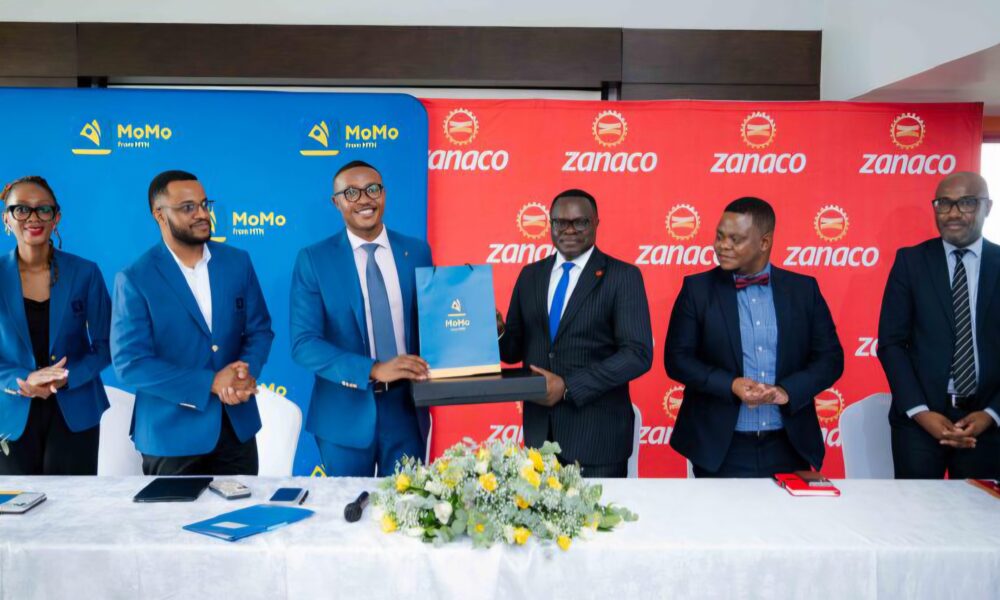
MTN Mobile Money Zambia yesterday announced a partnership with Zanaco Bank to introduce two innovations: MoMo payments on Zanaco Point of Sale (POS) machines and ATM Cash Outs.
Why Zambia Is Better Positioned Today to Withstand Global Shocks
Your email address will not be published.
Published
on
By
By Professor Lubinda Haabazoka
The United States and Israel conflict with Iran has the potential to create turbulence in global energy markets and international trade routes. Zambia enters this period from a far stronger macroeconomic position than it would have just a few years ago. Several structural improvements in the economy, including stronger foreign exchange reserves, improving fiscal discipline, rising copper prices, and progress in domestic fertilizer production, collectively provide important buffers against external volatility.
These developments do not eliminate exposure to global shocks, but they significantly improve Zambia’s capacity to absorb and manage them.
Strengthened Foreign Exchange Reserves
One of the most important improvements in Zambia’s macroeconomic fundamentals has been the rebuilding of foreign exchange reserves. The country’s reserves have increased to approximately US 5.5 billion, representing close to five months of import cover. This marks a significant recovery from earlier periods when reserves were considerably lower and external buffers were thin.
For those that have been asking why we need increased reserves, this is the time to appreciate them. And honestly the President and his team needs commendation on this. Stronger reserves provide the central bank with the capacity to smooth exchange rate volatility during periods of global financial stress. Stronger reserves also provide assurance to international markets that Zambia can meet its external payment obligations. This reduces the likelihood of speculative pressure on the Kwacha and helps maintain confidence among investors and creditors.
Improving Macroeconomic Fundamentals
Zambia’s broader macroeconomic environment has also improved in recent years. Economic growth has recovered, fiscal consolidation efforts have strengthened public finance management, and progress in debt restructuring has restored international confidence.
These improvements are critical because external shocks tend to affect weaker economies more severely. When fiscal deficits are high and reserves are low, even moderate global disruptions can trigger currency crises, inflation surges, and financial instability. Conversely, stronger macroeconomic fundamentals allow policymakers to respond to shocks with greater flexibility.
In Zambia’s case, the improved macroeconomic framework means that temporary oil price spikes or trade disruptions are less likely to trigger systemic instability.
The Copper Advantage
Another important protective factor is Zambia’s position as one of the world’s major copper producers. Copper accounts for more than 70 percent of Zambia’s export earnings, and global demand for copper remains structurally strong.
Geopolitical uncertainty often drives investors toward commodities and physical assets. Higher copper prices can partially offset the negative effects of rising oil prices by boosting export revenues and strengthening foreign exchange inflows. If copper prices remain elevated during periods of geopolitical instability, Zambia’s trade balance may remain more stable than that of many other energy importing economies.
Local Fertilizer Production and Reduced Import Dependence
Another structural development that strengthens Zambia’s resilience is the expansion of local fertilizer production capacity. As mentioned recently by President Hakainde Hichilema, Zambia has relied heavily on imported fertilizer, exposing the agricultural sector to global price fluctuations driven by energy costs and supply chain disruptions. In recent years, investments in domestic fertilizer blending and production have begun to reduce this dependency. Local production not only lowers import requirements but also shortens supply chains and stabilizes input availability for farmers.
Economic Diversification and Trade Networks
Although Zambia’s trade linkages with Gulf economies, including Dubai and Fujairah, expose the country to disruptions in Middle Eastern logistics and financial hubs, these linkages are also increasingly diversified. Zambia trades across multiple corridors, including Southern African regional routes, European markets, and Asian commodity buyers.
A More Resilient Economy
Taken together, stronger foreign exchange reserves, improved fiscal discipline, rising copper revenues, and increased domestic fertilizer production create a more resilient economic structure than Zambia had during previous global crises.
This does not mean that Zambia would be immune to the effects of a prolonged Middle Eastern conflict. Higher oil prices would still raise fuel costs. Freight and insurance costs could increase. Supply chains could face temporary disruptions.
Published
on
By
Order smart with Yango this March and you could be walking away with a brand-new iPhone 17.
Place 5 food orders of over K160 between March 1–31 and you’ll automatically enter the draw to win one of three iPhone 17s. Plus, every qualifying customer gets a special promo code for their next order as a bonus.
The live randomized draw happens on April 6 at 19:00 via the INWIT platform — fully transparent and recorded. Winners will receive a live call.
More bites. Bigger wins. Follow the Yango Zambia social media pages for more updates and the winner reveal.
Published
on
By
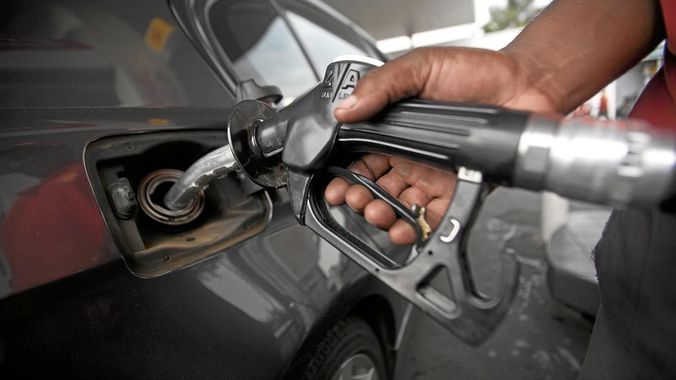
THE Energy Regulation Board (ERB) has reduced fuel prices following the strengthening of the Kwacha.
ERB Board chairperson James Banda announced the new pump prices, stating that petrol has been reduced from K27.88 to K26.61 per litre, while diesel has been reduced from K24.50 to K23.25 per litre.
“Based on the foregoing, the Energy Regulation Board (ERB) has revised the pump prices of petrol, diesel, kerosene and Jet A-1 downwards. Specifically, the pump price of petrol has been adjusted from K27.88 per litre to K26.61 per litre, diesel from K24.50 per litre to K23.25 per litre, kerosene from K22.24 per litre to K21.06 per litre, and Jet A-1 from K23.80 per litre to K22.39 per litre,” he said.
Mr Banda said the prices will come into effect at midnight on February 28, 2026, and will remain in force until revised by the ERB.
(Mwebantu, Saturday, 28th Februray, 2026)
© Copyright © 2026 Mwebantu. All Rights Reserved. Zambia’s leading Social news platform.