
The Myth of the Mega-Rally: Why Crowds Don’t Equal Votes
I am of the considered view that large political rallies do not, in any meaningful way, persuade undecided voters to support a presidential candidate. What they actually do is energize and mobilize an already committed base.
Yet, paradoxically, the 2026 presidential race appears to be turning into a competition of crowd sizes.
Fortunately, my assumption will be tested in real time with the Tonse Alliance. We cannot use the UPND as a control case, because the incumbent enjoys the structural advantage of the presidency. President Hichilema has effectively been campaigning for the entire term through governance, policy delivery, and national visibility.
The Tonse Alliance, on the other hand, presents a cleaner case study. Although it markets itself as a “new” party, it is in substance the former PF under a rebranded identity. Its central challenge is introducing new leadership to the electorate. And it has chosen to do so primarily through large-scale rallies. This makes it the ideal subject to test the theory: do rallies convert, or do they merely console?
UPND, in my view, was pressured into the rally approach — not out of strategic conviction, but to project numerical strength and match perceived momentum.
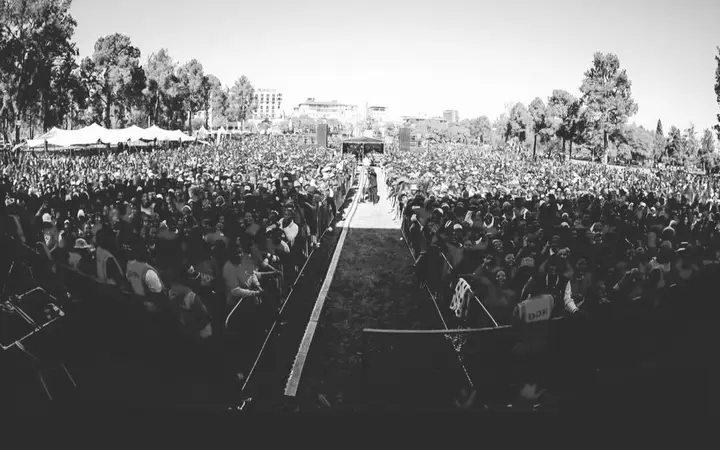
The Tonse Alliance launched with a massive provincial rally on the Copperbelt, followed by Central Province, and subsequently moved through three to four other provinces. It me it only re-awakened the PF grassroots and created the impression within the party that it was still politically alive.
This is where rallies are misleading. A rally of 2,000 people in a rural district or 15,000 in an urban center feels enormous on the ground but it a relatively small percentage to the registered voters. It looks and feels like national conquest. But in electoral terms, it is statistically insignificant.
Take the Copperbelt as an example. With roughly 1,000,000 registered voters, you have four rallies attracting about 30,000 people, represent just 3% of the electorate. And of that 30,000, a significant portion are not even voters — they attend for entertainment, curiosity, or transport. So who is speaking to the remaining 970,000 voters?
Rallies create noise, hype, and social media clips. But noise is not the same as persuasion.
Historically, rallies worked because word-of-mouth was the dominant mode of information dissemination. A large gathering was the only way to reach masses at once. That era has passed.
Thats why we no longer see Christian crusades with the same frequency, precisely because mass gatherings are no longer the most effective tool for “mind” change. The same principle applies to politics.
Even aspiring MPs in Lusaka or Copperbelt will tell you privately that a personal rally is inefficient. They prefer community meetings, ward meetings, social media and door-to-door campaigns because those formats allow for targeted persuasion. If that is true for parliamentary races, why do we assume it is the best strategy for a presidential race?
Mass communication theory supports this; In health, marketing, and civic education, experts know that broadcasting to a large, passive crowd produces short-lived excitement but poor retention and conversion. The excitement fades in 48 hours.
If the Tonse Alliance candidate, Brian Mundubile, posts surprisingly poor results despite the visible “noise,” the explanation may lie in this strategic miscalculation. Rallies flatter the ego of the party, but they do not expand the base.
When that happens, expect claims of “stolen elections.” But the real theft may be self-inflicted — stolen by the illusion that a full stadium equals a national mandate.
Nkonkomalimba Kapumpe
1. We flock to the rallies just to hear the voices of those who want to become politicians.
2. The crowd is a mix of all political parties supporters not only for the party at the rally.
3. It’s one of entertainment during the campaign periods, the music, the performances, the drama from t aspirants just attracts the attendees.
4. Ti see the aspirants who are new on the block and hear their mandate.
This is the reason why the crowd is not the votes.