
🇿🇲 EXPLAINER | Zambia Bets on Coal to Keep the Lights On
For years, Zambia’s economy has been held hostage by a simple reality: when the rains fail, the lights go out. Now, the country’s state investment arm, ZCCM Investments Holdings (ZCCM-IH), is making a significant wager that Zambia’s energy future cannot depend on hydropower alone.
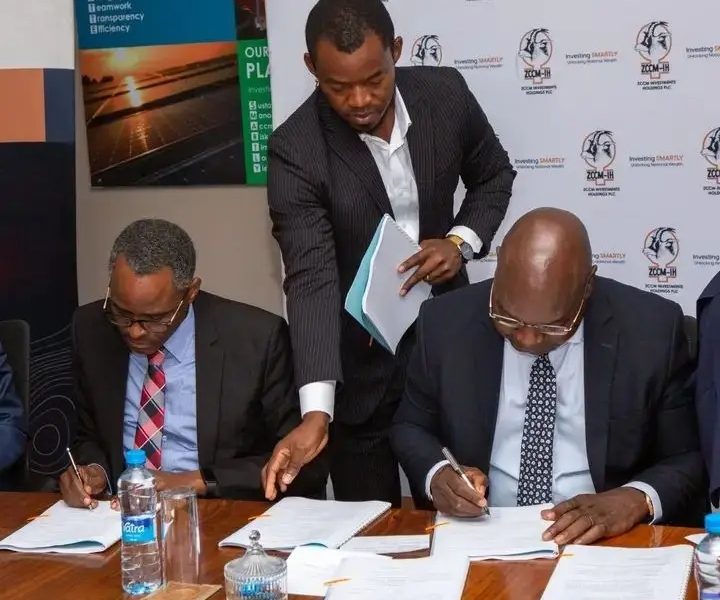
In a transaction announced to the market on June 1, ZCCM-IH revealed that it has partnered with Chinese-owned Wonderful Group Services Ltd to develop a major thermal power project expected to generate up to 600 megawatts of electricity. The project will be implemented through a special purpose vehicle called Ever Great Energy Company Limited.
At its core, the deal is an acknowledgement of a painful lesson Zambia has learned over the past three years: an economy cannot industrialise if it cannot guarantee power.
Why This Matters
The numbers tell the story. Zambia currently faces an estimated electricity deficit of roughly 1,400 megawatts. The shortage has translated into load shedding, reduced industrial output, lost business hours, and slower economic activity. Mining companies, manufacturers, farmers, and households have all felt the consequences.
The country remains heavily dependent on hydroelectricity generated from dams such as Kariba, Kafue Gorge, and Itezhi-Tezhi. When drought conditions hit Southern Africa, generation capacity falls sharply.
The result is what Zambia experienced between 2024 and 2026: one of the most severe energy crises in recent memory.
The new project seeks to reduce that vulnerability.
According to ZCCM-IH, the first phase will involve construction of a 300MW coal-fired thermal power plant in Sinazongwe District, Southern Province. A second phase is expected to double capacity to 600MW within five years.
“The project aims to contribute towards closing Zambia’s baseload peak demand generation deficit of approximately 1,400MW,” ZCCM-IH stated in its transaction announcement.
Following the Money
The total project carries an estimated price tag of US$451.7 million. Under the agreement, ZCCM-IH will contribute US$54.2 million in exchange for a 30 percent shareholding in Ever Great Energy Company Limited.
The remaining investment will come from the Chinese partner through its subsidiary structures. For ZCCM-IH, the transaction is relatively modest compared to the overall project value, allowing the state investment firm to participate without carrying the full financing burden.
Market disclosures show that the transaction represents approximately 4.24 percent of ZCCM-IH’s market capitalisation and therefore does not trigger major categorisation requirements under Lusaka Securities Exchange rules.
Why Coal? Why Now?
The decision will inevitably spark debate. Across much of the world, governments are moving away from coal in pursuit of cleaner energy sources. Yet Zambia’s challenge is not primarily environmental. It is economic.
The immediate question confronting policymakers is how to keep mines operating, factories running, and households connected while renewable alternatives continue to develop.
Coal offers something solar and hydro cannot always guarantee: baseload power. It generates electricity around the clock regardless of rainfall, cloud cover, or seasonal weather conditions.
For a mining economy seeking to expand copper production from current levels toward the government’s target of 3 million tonnes annually, reliable power has become a strategic necessity.
In its announcement, ZCCM-IH argued that the project would “significantly reduce Zambia’s reliance on hydroelectric generation source to support national economic growth and stabilise overall power supply.”
The Mining Connection
This is where the story becomes bigger than electricity. President Hakainde Hichilema’s administration has repeatedly identified copper expansion as the centrepiece of Zambia’s economic strategy. New investments are flowing into mining, old operations are being revived, and production targets continue rising.
But copper production and electricity are inseparable. Every additional tonne of copper requires energy.
Without new generation capacity, Zambia risks attracting mining investment while lacking sufficient power to support it. The thermal plant therefore represents more than an energy project. It is infrastructure designed to underpin the country’s broader mining ambitions.
The Bigger Picture
Just last week, Zambia announced a series of large-scale economic transactions. A US$600 million African Development Bank facility linked to power infrastructure. A US$1.36 billion Eurobond buyback strategy. The revival of Ndola Lime through Chinese investment. And now a US$451.7 million thermal power project.
Viewed individually, each project addresses a different challenge. Viewed together, they reveal a broader strategy: stabilise public finances, expand energy generation, strengthen mining supply chains, and position Zambia for higher industrial output over the next decade.
Whether the plan succeeds will depend on execution. Power plants are easier to announce than to build.
Financing must close. Regulatory approvals must be secured. Construction timelines must hold. Environmental concerns must be managed. But one reality is increasingly clear.
After years of drought-induced power shortages, Zambia is no longer treating electricity as a utility issue. It is treating it as an economic survival issue.
And this latest investment suggests the country is willing to make substantial bets to ensure the lights stay on.
—For story tips, opinion submissions, advertising, partnerships, or corrections:
📩 editor.peoplesbrief@gmail.com
© The People’s Brief | Ollus R. Ndomu
Verified. Contextual. Independent.