
By Jay Naidoo
A Call to Action: South Africa Must Choose Accountability Over Hatred
South Africa stands at one of the gravest tests of its democracy since the assassination of Chris Hani in April 1993.
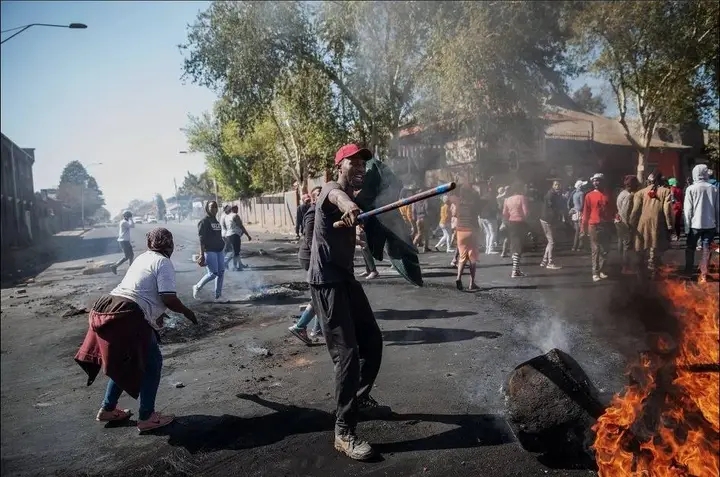
Many will remember those terrible days. The country stood on the edge of an abyss. Anger, grief and fear threatened to consume us. The possibility of widespread violence was real. It would have taken very little for South Africa to descend into chaos of a racial civil war.
At that decisive moment, Nelson Mandela did not wait for events to overtake him.
He spoke to the nation.
Calmly.
Fearlessly.
With moral authority.
Before he became President by election, he became President in the hearts and minds of South Africans because he gave the country something every frightened nation longs for: confidence that leadership still existed.
Today our country faces a different crisis, but it demands the same quality of leadership.
Mr President, where are you?
This is the moment when South Africans need to hear your voice, not as the leader of a political party, but as the President of every person who lives in this country.
This is not a responsibility that can be delegated to ministers, police commissioners or government spokespersons.
The nation needs reassurance.
It needs moral clarity.
It needs constitutional leadership.
It needs to know that no South African, no migrant, no refugee, no asylum seeker, no child, no worker and no business owner will be abandoned to intimidation or violence.
It needs to know that legitimate concerns about immigration will be addressed through the rule of law—not through mobs, vigilantism or political intimidation.
The Presidency exists for moments like this.
Your office carries responsibilities that no one else in our democracy can fulfil.
Speak to the nation.
Call every South African to calm.
Affirm that every person’s dignity will be protected.
Make it unmistakably clear that while government will enforce immigration laws firmly and fairly, it will never surrender the streets of South Africa to vigilante groups.
Direct every minister, premier, mayor, councillor and Member of Parliament to be present in their communities.
Direct the South African Police Service to prevent violence before it begins.
Direct the National Prosecuting Authority to investigate not only those who commit violence, but those who organise it, finance it and incite it.
History will not judge this moment by speeches made after the violence.
History will judge whether leadership prevented the violence.
Because this is not simply a debate about immigration.
It is a test of the soul of South Africa.
It is a test of whether we still believe that our Constitution protects every person’s dignity.
It is a test of whether we remain faithful to the promise millions of South Africans voted for in 1994.
Words are no longer enough.
I have spent much of my life organising mass movements. I know their power. I know how ordinary people, united by hope, discipline and purpose, can change history. We saw it in the struggle against apartheid. We saw it in the trade union movement. We saw it in the National Peace Accord, when South Africans chose dialogue over civil war.
But I also know something else.
Mass mobilisation built on fear is one of the most dangerous forces a society can unleash.
Once hatred becomes organised, once crowds begin to believe that another group of human beings is responsible for all their suffering, the genie escapes the bottle. History teaches us that once it is released, it is extraordinarily difficult to contain.
It begins with words.
It begins with slogans.
It begins with reducing people to labels instead of recognising their humanity.
Then comes intimidation.
Then exclusion.
Then violence.
Before people are attacked, they are first dehumanised. They cease to be neighbours, workers, parents or children. They become “the problem”. They become less than human.
We have seen this throughout history.
Under apartheid.
In Nazi Germany.
In Rwanda, where Tutsis were repeatedly described as “cockroaches” before the genocide began.
South Africans should recognise this pattern because we have lived through it ourselves.
I ask those organising these mobilisations a simple question:
Do you truly understand the forces you are unleashing?
Once communities turn against one another, once neighbours begin to fear one another, once children inherit the language of hatred, no political leader can simply call it back.
Hatred spreads beyond its organisers.
It enters our homes.
Our schools.
Our workplaces.
Our streets.
It becomes a tsunami that look consumes everyone in its path.
There is another danger.
History teaches us that societies fractured by fear become vulnerable to manipulation. Internal divisions are exploited by those seeking political advantage. Today we already see nationalist and tribalist forces attempting to mobilise legitimate public frustration for electoral gain.
Countries weakened by internal conflict also become vulnerable to external interests pursuing their own strategic objectives.
A nation consumed by division is less able to defend its sovereignty, its democracy and its moral authority.
Whether the threat comes from domestic opportunists or foreign interests, the result is the same:
A weaker South Africa.
That is why legitimate concerns about illegal immigration, unemployment, crime, corruption and state failure must never be transformed into hatred against entire communities.
Government has publicly reaffirmed an important constitutional principle.
Immigration laws must be enforced firmly and fairly by the state, not by vigilante groups.
That commitment deserves to be welcomed.
But South Africans have heard strong words before.
Now we must see action.
After the xenophobic attacks of 2008.
After repeated outbreaks over the past decade.
After the devastating unrest of 2021.
Far too few of those who organised, incited or financed violence have been held accountable.
That cycle must end.
The credibility of the rule of law will not be measured by speeches.
It will be measured by investigations.
By prosecutions.
By convictions.
By accountability.
Our demands are therefore clear.
Government must protect every person living in South Africa from violence.
It must enforce immigration law firmly, fairly and lawfully.
It must prevent violence before it occurs.
It must investigate those who organise, finance and incite violence.
It must publish regular reports so the public can judge whether accountability is being delivered.
Every elected representative should be present in their communities, not behind office doors or security fences.
Leadership means protecting people, not exploiting fear.
Every political party must reject xenophobia unequivocally.
Those who seek political advantage through hatred should be rejected by voters and, where laws have been broken, prosecuted by the courts.
The South African Police Service and the National Prosecuting Authority must ensure that justice reaches not only the individual who throws the first stone but those who planned the violence, financed it, encouraged it and organised it.
To every South African, I say this:
Do not surrender your conscience to the crowd.
Protect life.
Document evidence.
Report those responsible.
Refuse to become an instrument of hatred.
Our democracy was not won through fear.
It was won through courage.
Through discipline.
Through sacrifice.
Through an unwavering belief that every person’s dignity matters.
Look again at the photographs of those long queues in 1994.
The farm worker.
The domestic worker.
The grandmother.
The miner.
The teacher.
The student.
They had every reason to choose revenge.
Instead they chose reconciliation.
They rejected fear.
They rejected hatred.
They chose a constitutional democracy founded on dignity, equality and freedom.
That is what we are protecting today.
Finally, this country needs something larger than another security operation.
South Africa needs a new National Peace Movement.
As we did through the National Peace Accord, faith communities, business, labour, civil society, traditional leaders, youth organisations and political parties must once again organise for peace before conflict becomes violence.
Peace is not passive.
Peace is organised.
Peace requires courage.
Peace requires leadership.
Peace requires accountability.
Peace requires every one of us.
Mr President, history rarely gives leaders the opportunity to define a generation.
Usually it gives them one moment.
This may be yours.
The South Africans who stood patiently in those queues in 1994 believed they were giving birth to a nation founded on dignity, justice and the rule of law.
They entrusted that inheritance to those who would come after them.
Protect it.
Lead us.
Speak before others speak for South Africa.
Unite us before others divide us.
That is what the Presidency demands.
That is what this moment requires.
We defeated apartheid because millions of ordinary South Africans organised for justice, discipline and hope.
We can defeat hatred the same way.
Not through fear.
Not through vengeance.
But through courage.
Through accountability.
And through an unwavering commitment to our common humanity.
The Nation seeks the leadership of the highest office in our beautiful country.
Please answer our call for peace and stability and effective action in this moment of our journey to the better life we promised our people in 1994.