








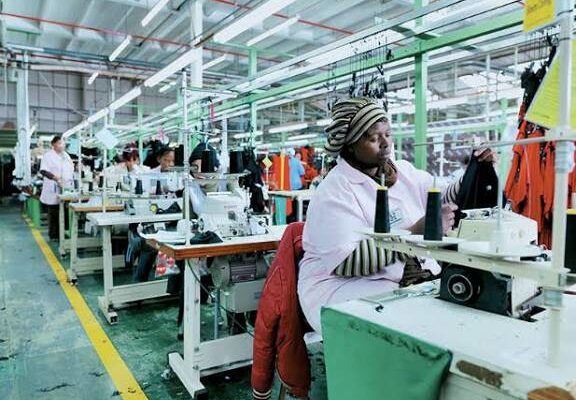
A new report by the United Nations Conference on Trade and Development (UNCTAD) shows that Zambia could unlock more than US $1.6 billion in new economic opportunities and create up to 115,000 jobs by expanding beyond upstream copper extraction into higher-value industrial activities.
The report was produced under UNCTAD’s project Critical Energy Transition Minerals: Rapid Assessment of Value Addition and Diversification Capacity in Southern Africa, funded by the government of Japan.
It outlines implementation priorities and policy options to support Zambia’s industrialisation and economic diversification agenda.
“Zambia’s economy remains dependent on a few primary exports, exposing it to external shocks and volatility, and underscoring the importance of productive diversification for economic resilience,” the report noted.
It highlights potential new products for diversification, taking into account existing industrial capacity and global trends to attract investment. Opportunities span both critical energy transition minerals (CETM) value chains and sectors beyond them, with the latter helping to build capabilities needed for long-term upgrading in CETM-related activities.
The analysis combines quantitative methods—such as economic complexity and product-space modelling—with qualitative insights from industry stakeholders on feasibility and desirability.
“Zambia’s diversification pathway is both economically significant and employment-intensive, offering opportunities to attract investment through value chain development,” the report stated.
A subset of products identified as technically and commercially viable—validated during a national workshop and company interviews—would require an estimated US $1.21 billion in capital investment and could generate approximately 115,000 jobs.
Iron and steel stand out as the largest contributors, requiring around US $745 million and creating more than 62,000 jobs.
Other high-potential sectors include plastics (US $203 million; 14,000+ jobs), paper and paperboard (US $82 million; 9,000+ jobs), electrical machinery and equipment (US $14 million; 8,000+ jobs), chemicals (US $50 million; 7,000+ jobs), copper articles and other metals (US $72 million; 7,000+ jobs), and machinery and mechanical appliances (US $31 million; 4,000+ jobs).
Food processing is also highlighted for its strong labour absorption and quick deployment potential. With an investment of just US $13 million, it could create more than 2,300 jobs while strengthening production and compliance capacities that support CETM-linked manufacturing and processing.
The report also outlines examples of potential products by sector, including salts of inorganic acids or peroxoacids under HS code 281820, priced between US $3 and US $40.
On export diversification, the analysis identifies complementary products with strong potential in the Southern African Development Community (SADC) and across the continent. Within SADC, key markets include South Africa, Tanzania, and Angola, representing US $199.2 million in potential trade. Across Africa, Egypt, Ethiopia, and Morocco emerge as major prospective partners.
“Substantial export opportunities underscore the need to diversify, with identified markets in the region indicating the importance of strengthening intra-regional trade and leveraging existing frameworks,” the report added.
Import-substitution potential is also significant, with 89 products worth US $229 million identified across 13 sectors.
UNCTAD notes that Zambia’s diversification strategy should focus on high-potential products supported by coordinated, sector-specific action plans.
Read More: UN calls on African countries to accelerate industrialization, job creation, inclusive growth
While the country has a relatively mature mining ecosystem, the report stresses that expanding downstream value addition, strengthening domestic ownership, and improving stakeholder coordination will be critical to capturing greater value from CETM resources and deepening industrial capabilities across other sectors.
Overall, the analysis identifies 412 potential products across 25 sectors—including chemicals, iron and steel, and machinery and mechanical appliances. Seventy-three of these are directly linked to CETM value chains, mainly copper, nickel, and other mineral-based products.
It emphasises that opportunities beyond CETM value chains help build industrial foundations such as process engineering, standards compliance, and manufacturing know-how—capabilities that support long-term upgrading within CETM industries.
Under a global export scenario, 226 products were identified with a weighted opportunity of US $1.4 billion. Of these, 45 are CETM-related, carrying a weighted export value of US $538.6 million, with top markets including China, the United Arab Emirates, and India.
The report further underlines the importance of services—such as logistics, engineering, and testing—as critical enablers of diversification and export competitiveness. It observes that while Zambia has some domestic capacity, services remain fragmented, increasing reliance on foreign providers.
“More effective alignment of enterprise support with services upgrading, alongside the formulation and implementation of supportive services trade policies, can therefore support diversification,” the report emphasized.
WARNING! All rights reserved. This material, and other digital content on this website, may not be reproduced, published, broadcast, rewritten or redistributed in whole or in part without prior express permission from ZAMBIA MONITOR.
Your email address will not be published. Required fields are marked *

Social Media
Communication
Bookmarking
Developer
Entertainment
Academic
Finance
Lifestyle
You may be interested
“Ruth Grand Phiri and Her Commitment to Transforming Chipata City”
Ruth Grand Phiri is widely recognized as an inspiring and...
Women and girls in science: Dismantling barriers, closing gender gaps
Facebook Twitter Print Email Although women are more likely than...
UN warns civilians remain at risk as airstrikes continue across Gaza
Facebook Twitter Print Email Fresh airstrikes and shelling across the...