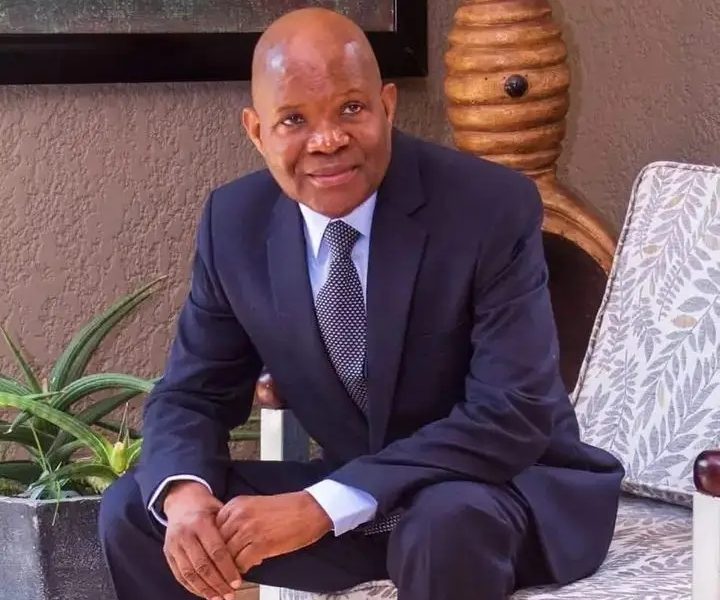

🇿🇲 EDITOR’S NOTE | When Anger Becomes Campaign Strategy
Politics rewards conviction. It does not always reward bitterness.
Over the past week, Socialist Party president Fred M’membe has returned repeatedly to the death and delayed burial of former president Edgar Lungu. His latest remark was among his strongest yet: “Let Hakainde use that grave he dug for Edgar Lungu… If Hakainde has any sense of shame, he must be so ashamed of himself for keeping the body of Edgar Lungu in the fridge for one year.”
The language is striking. It is confrontational. It is designed to provoke. But it also raises a larger political question: What is Fred M’membe asking voters to vote for?
Campaigns are ultimately about competing futures. They are moments when candidates explain how they intend to lower the cost of living, create jobs, improve healthcare, strengthen education and grow the economy. Anger may capture headlines for a day. It rarely sustains a national campaign.
This partly explains an emerging political reality. While Mr M’membe remains one of Zambia’s most articulate opposition figures, the Socialist Party has steadily lost campaign momentum to the newly formed NRPUP-led Tonse alliance. Brian Mundubile has dominated the opposition conversation not because his economic programme is necessarily more detailed, but because his campaign has projected movement, organisation and a simple electoral objective. Politics rewards visibility. It rewards momentum.
The Socialist Party, by contrast, increasingly appears trapped inside a grievance campaign. Nearly every major intervention returns to the same subject: President Hakainde Hichilema, Edgar Lungu and unresolved political disputes. Those issues matter. They deserve scrutiny. But elections are seldom won by asking voters to remain permanently angry.
The irony is difficult to ignore. Mr M’membe presents himself as Zambia’s leading socialist thinker. His political tradition ordinarily centres labour, production, industrialisation, agriculture, inequality and state capacity. But those themes have become secondary to attacks on President Hichilema’s character. The campaign has become personal where many expected it to be ideological.
There is another contradiction. The delayed burial of Edgar Lungu has become the dominant opposition rallying point. Yet that same issue has exposed differences within the opposition itself. While the Lungu family maintained that they were protecting the former president’s wishes, Mundubile recently declared that he and his running mate, Makebi Zulu, had agreed to bury Mr Lungu only if they win the August election. That statement fundamentally altered the political conversation. If burial is now linked to electoral victory, voters are entitled to ask whether the dispute remains about honouring personal wishes or whether it has entered the realm of campaign strategy.
That development also leaves Mr M’membe in an increasingly awkward position. Having invested heavily in portraying the delayed burial as solely the responsibility of President Hichilema, he now confronts a competing narrative emerging from within the broader opposition itself. It is one that raises uncomfortable questions without answering them.
Political criticism remains essential in any democracy. Governments must be challenged. Presidents must be held accountable. But criticism becomes less persuasive when it is driven more by resentment than by a competing national vision.
There is still time for every candidate to redefine their campaign. The electorate has just begun making its choices. The question is whether Zambia’s opposition wants to spend the next five weeks debating graves or debating growth.
People power changes governments. Ideas change countries. The campaigns that endure are usually those that offer voters more hope than anger.
© The People’s Brief | Editor