When Guinea Chose Independence Over France, France Tore Down What It Built Rather Than Leave It Behind.

When Guinea Chose Independence Over France, France Tore Down What It Built Rather Than Leave It Behind.
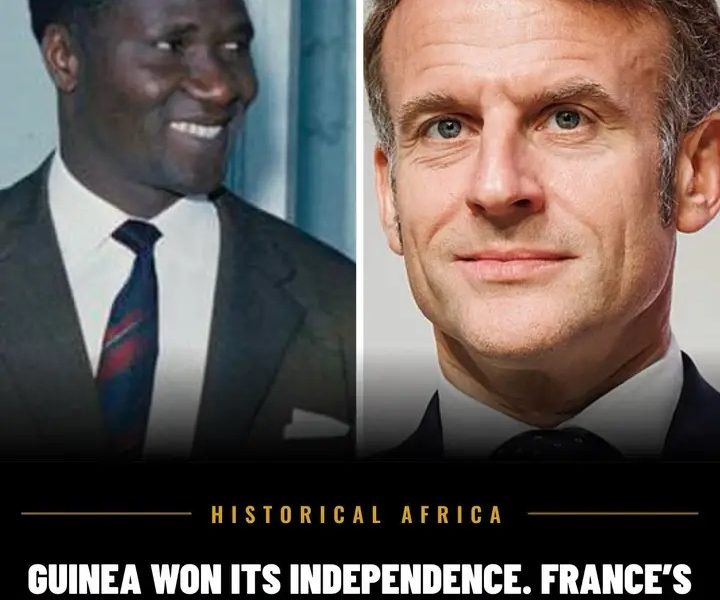
In September 1958, France gave its African colonies a choice. Stay in the French Community with limited autonomy, or vote no and take full independence with nothing guaranteed in return. Every territory except Guinea chose to stay. Guinea, led by Ahmed Sekou Toure, voted no by more than 95 percent. “We prefer poverty in freedom to riches in slavery,” Toure told Charles de Gaulle directly. On October 2, 1958, Guinea became the first French African colony to fully break away.
France’s response was not diplomatic distance. It was deliberate destruction. Over a two month withdrawal, French officials stripped the country of everything they could carry and wrecked what they could not. They unscrewed lightbulbs from buildings. They destroyed the plans for Conakry’s sewage pipeline system. They burned medicine rather than leave it for Guineans to use. Administrative files were destroyed. Public buildings were sabotaged. All financial and technical support was cut overnight, leaving Guinea without the civil servants, equipment or trained personnel needed to run a functioning state.
It did not stop there. By 1960, when Guinea launched its own currency, France’s intelligence service drew up Operation Persil, a covert plan to flood Guinea’s economy with counterfeit currency and trigger collapse. The plan leaked before it launched.
Cut off and isolated, Guinea turned to the Soviet Union for support and survived anyway, becoming proof that the cost of independence could be paid and the debt never owed in the first place.
The history books rarely mention what France was actually willing to destroy just to make an example out of one country saying no.
— Historical Africa🌍
#HistoricalAfrica #Guinea #SekouToure #France #Decolonization