
Football feels different now because the game moves faster in every part of the pitch. Teams no longer wait as much. They press early, run harder, and try to win the ball back before the other side can settle. This has changed the kind of player coaches want. It is no longer enough to do one job well and stay there all game. Modern football now asks for more. A full back may step into midfield. A winger may defend like a second full back. A striker may start the press before anyone else. That is why tactics, high pressing, and versatility now sit at the centre of the modern game.
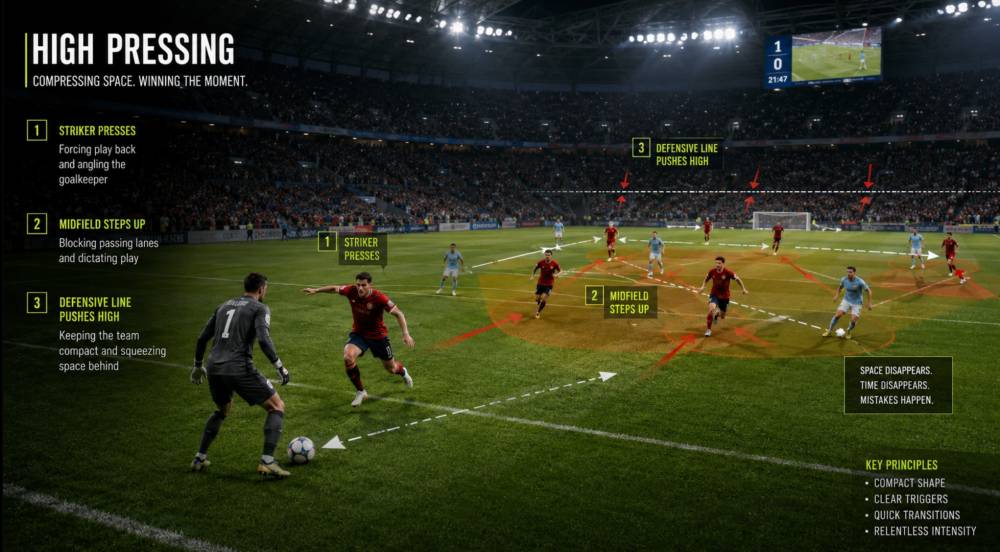
One of the clearest changes in football is how quickly teams try to close space. In the past, some sides were happy to drop back and wait. Now many teams want the ball back at once. They press the keeper, the defenders, and the midfield line with much more energy. The aim is simple. Do not let the other team feel calm.
This has changed the whole flow of matches. Players get less time on the ball, and mistakes happen faster. A slow pass can become a chance in seconds. A loose touch can turn into a goal. High pressing is not only about running. It is about timing, shape, and trust. Each player must know when to jump, when to cover, and when to hold the line.
A single player cannot press well alone. If one man runs and the others stay still, the shape breaks and the other team plays through it. That is why good pressing sides move like a unit. The front line starts the action, but the midfield and defence must move with them. The whole team squeezes the pitch and makes every pass feel tight.
This new style has made versatile players more valuable. Coaches love players who can shift roles without losing their level. A midfielder may help build play from deep, then arrive high up the pitch two seconds later. A defender may protect the back line, then step inside to help control the game. The modern player must read the match and adapt quickly.
That is one reason football squads now look different. Managers want players who can solve more than one problem. A player who understands space, movement, and timing can help the team in several ways. That gives the coach more freedom and keeps the team harder to predict.
Versatility helps because matches are full of small changes. A team may need width for ten minutes, then more control in the middle after that. A player who can switch with ease gives the side balance. This is not only about talent. It is also about football intelligence. The player must understand what the game needs in each moment.
Speed still matters, but modern football is not only about running. It is also about reading what happens before it fully opens up. The best teams think fast. They see danger early, move early, and shut space before the attack grows. That is why the modern game feels more demanding than before.
Fans notice this change too. One minute they are watching a team press high and turn defence into attack. The next minute they are on their phones, moving between match clips, stats, and even random searches like casino games in Zambia, while still trying to follow the shape of the game. Football now lives in a fast world, and the tactics on the pitch reflect that same speed.
The modern game rewards teams that stay alert, flexible, and brave enough to move together. High pressing has changed how space is used. Versatile players have changed how roles are understood. Football is no longer built around fixed positions in the old way. It is built around movement, pressure, and smart players who can do more than one thing well. That is what makes modern football so demanding, and so interesting to watch.