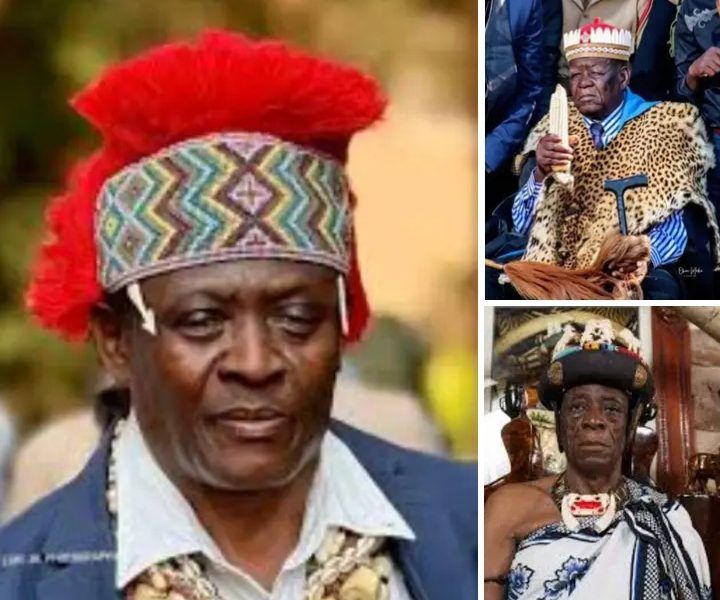
Unpopular Opinion: Why the Mwata Kazembe Case Carries Greater Historical Weight Than the Paramount Chief Campaign by Chief Monze and Chief Mukuni

Unpopular Opinion: Why the Mwata Kazembe Case Carries Greater Historical Weight Than the Paramount Chief Campaign by Chief Monze and Chief Mukuni
By Editorial Desk
Traditional leadership is among Africa’s oldest and most enduring institutions. Across the continent, kings, queens, chiefs, and clan leaders have shaped governance, preserved culture, resolved disputes, and provided a sense of identity long before the emergence of modern nation states. In Zambia, where more than 70 ethnic groups coexist peacefully, traditional institutions remain an integral part of the country’s social and constitutional fabric.
It is therefore unsurprising that the recent campaign by Chief Monze and Chief Mukuni advocating for the recognition of a Paramount Chief for the Tonga-speaking people of Southern Province has generated considerable public debate. For many, the proposal represents an opportunity to strengthen cultural identity and provide a unified traditional voice. For others, it raises profound questions about history, customary legitimacy, and the evolution of indigenous governance.
This editorial advances an unpopular, but carefully considered opinion.
The issue is not whether the Tonga people deserve this recognition. Every traditional community deserves equal respect and constitutional protection. Nor is the issue whether Chief Monze or Chief Mukuni are distinguished traditional leaders. Their contribution to preserving Tonga culture and advancing community development is widely acknowledged.
The real question is different.
Does the historical record support the creation of a Paramount Chief within a society whose traditional governance has generally been decentralised?
That distinction matters.
Political anthropologists have long classified African traditional societies into two broad categories: centralized and decentralized systems of governance. Centralized societies developed clear hierarchies, with supreme traditional authorities exercising recognised authority over subordinate chiefs. Decentralized societies, by contrast, evolved through autonomous chiefdoms, where authority was exercised independently and leadership was sustained through consultation, customary law, and local legitimacy rather than a single overarching ruler.
The Tonga-speaking communities of Southern Province have generally been understood within the latter tradition (decentralized). Historically, individual chiefs exercised authority within their own territories without permanent subordination to a single paramount office embracing all Tonga chiefdoms. This decentralized character became part of the identity of Tonga customary governance itself.
Recognising this historical reality does not diminish the importance of Tonga traditional institutions. On the contrary, it highlights the richness and diversity of Zambia’s indigenous political systems. Decentralisation was not a weakness; it was simply a different model of governance that reflected the social and historical development of the people.
It is against this background that comparisons with other traditional institutions must be approached carefully.
In the view of this publication, if one is searching for a Zambian example that better illustrates the historical development of paramount traditional authority, the institution of the Mwata Kazembe of the Lunda people of Luapula Province offers a more compelling point of reference.
The Mwata Kazembe institution is not merely a ceremonial title. It is the product of centuries of political organisation, historical continuity, recognised succession, and enduring cultural authority within the Lunda tradition. Its legitimacy is deeply rooted in the historical evolution of the community it serves. While every traditional institution has its own unique history, the Kazembe example demonstrates how paramount authority can derive from an established historical foundation rather than contemporary aspiration alone.
The current proposal associated with Chief Monze and Chief Mukuni is fundamentally different because it seeks to establish or formalise a level of traditional authority within a governance system that has historically operated through autonomous chiefdoms. That does not make the proposal illegitimate. It simply means that the burden of demonstrating customary legitimacy is considerably higher.
Supporters of the proposal present thoughtful arguments. They contend that a Paramount Chief could enhance cultural cohesion, strengthen representation on national issues, improve coordination among chiefs, promote cultural tourism, and provide a unified platform for preserving Tonga heritage. These are legitimate aspirations that deserve respectful consideration.
Equally legitimate, however, are the concerns raised by historians, customary law scholars, and some traditional governance experts. They caution that introducing a paramount office into a historically decentralised system is not simply the recognition of an existing institution. it is a constitutional and cultural transformation. Such a change has implications for customary authority, succession, jurisdiction, and the delicate balance that has historically existed among independent chiefdoms.
History teaches that traditional institutions derive their authority not merely from official recognition but from the acceptance of the communities they represent. Titles can be conferred through legal instruments, but legitimacy is earned through history, custom, and collective consent.
This is why the debate should never become a contest of personalities or prestige. Neither Chief Monze nor Chief Mukuni should be viewed as adversaries in a struggle for status. Instead, their initiative should be appreciated for provoking an important national conversation about how traditional institutions should respond to changing times.
Yet important conversations require equally rigorous historical reflection.
If Zambia chooses to redefine any traditional governance structure, the process should be informed by documented history, customary practice, constitutional principles, and broad consultation among traditional leaders, historians, legal scholars, and the communities most directly affected. Reforms that emerge through consensus are more likely to endure than those driven by symbolism or political momentum.
Ultimately, this editorial does not argue against cultural evolution. Culture has always evolved.
Traditional institutions across Africa have adapted to changing political and social realities while remaining custodians of identity and heritage.
What this editorial argues is something more modest, but more fundamental: historical legitimacy should remain the starting point for institutional reform.
That is why, in our considered opinion, the Mwata Kazembe institution currently presents a stronger historical case when discussions turn to paramount traditional authority in Zambia. Not because one people are more important than another, nor because one culture deserves greater recognition, but because the historical foundations of the institution align more closely with the concept of paramount authority itself.
Reasonable people will disagree with this conclusion, and they should. Healthy democracies, and healthy traditional societies, are strengthened by respectful debate grounded in evidence rather than emotion.
The future of Zambia’s traditional institutions will not be secured by titles alone. It will be secured by fidelity to history, respect for customary law, and a shared commitment to preserving the extraordinary cultural diversity that has long defined the Republic.
If the current debate inspires deeper historical research, broader community consultation, and greater appreciation of Zambia’s many traditional governance systems, then it will already have served an important national purpose, regardless of where the final decision ultimately rests.
Forceful, compelling argument. The ball is in the courts of those advocating for the change. There needs to be an agreed mechanism for testing the level of support the idea has from the other chiefs and the governed.
Courts are not in the business of conferring paramount chief status on any chief. It’s purely a prerogative of government and evdn then, only the colonial government did that. There’s no post-independence government that has seen it fit to create new paramount chiefs. We’re doing very well, thank you, without new paramount chiefs. Even the existing ones serve no purpose. We would not have created them if the colonial government did not create them.
Kill the tribe,by doing so you just see someone as a fellow citizen,burn borders by doing so you will just someone as a fellow citizen of African,kill race identity,by so doing will just see someone as a fellow human being.A citizen of the World.Its not simple but some of us try.