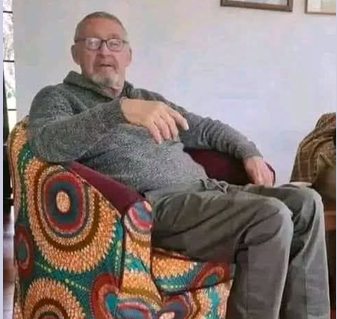
Did you know Zambia’s commercial wheat 🌾 industry started with a seed hidden in Dr. Guy Scott’s partner’s socks 🧦 and smuggled into Zambia from Zimbabwe?

Conversations with Memorable Personalities
GUY SCOTT, THE FARMER!
Did you know Zambia’s commercial wheat 🌾 industry started with a seed hidden in Dr. Guy Scott’s partner’s socks 🧦 and smuggled into Zambia from Zimbabwe?
From Smuggled Sock-Seeds to Strawberry 🍓 Jams: This is how Dr. Guy Scott built Zambia’s farming empire!
Read Dr. Guy Scott’s fascinating revelation in this brief excerpt from the book: Conversations with Memorable Personalities (2022), Page 317. 📖👇
Amos Malupenga: Apart from the Ministry of Finance and Economy, where else did you work?
Dr Guy Scott: After being a Tiny-editor, I went into farming in 1970. I bought a couple of farms, near the Lusaka International Airport and called them Walkover Estates. I had married by this time and I had three children. I married in 1966. My wife was a Yugoslav, a Croatian, whose father had worked in the planning unit with me.
As Walkover, we proceeded to do a lot of pioneering work. We mastered the production of off-season tomatoes; we managed to beat Ian Smith’s sanctions and got the potato industry going in Zambia; and we got the wheat industry working in Zambia. We started producing strawberries in Zambia; it was so efficient that even rasberry jam was made from strawberries by Lyons on the Copperbelt.
I found that I had talent in understanding how plants think. I was able to bring a
strawberry from California and persuade it to work in Zambia by doing certain things to it at the right time. In the process, we knocked out a few amateur producers, such as a certain Mundia Sikatana.
Incidentally, when I wanted to get the wheat industry started up, I heard that the
Rhodesians had done some breeding of new wheat varieties. One of my partners in Walkover Estates jumped on a private charter plane which was going down to Salisbury [Harare] just for one day, he was taking some people from Anglo American Corporation to Salisbury.
He went into a farmer’s shop and bought a quarter of a kilogram of wheat seed, hid it in his socks and we brought it back to Zambia thereby violating both the Rhodesian and the Zambian customs restrictions. We vigorously bulked the wheat up. We planted it, watered it and harvested it. That was the basis of the Zambian wheat industry within two years as we expanded. After the end of war in Zimbabwe in 1980, the plant breeders’ association in Zimbabwe asked me to pay them royalties. I told them to first pay us compensation for all the lives lost and bridges blown up by their soldiers during the war.
In 1977, I was asked to advise on agricultural investment under the new European Lome II aid program. I designed the Mpongwe Pilot Project and won the contract to implement it. That pilot project is now Mpongwe Development Company which is a huge mixed farming enterprise on the Copperbelt. It is the biggest non-sugar farm in Southern African. It farms sugar, wheat and coffee mainly and nowadays belongs to CDC.