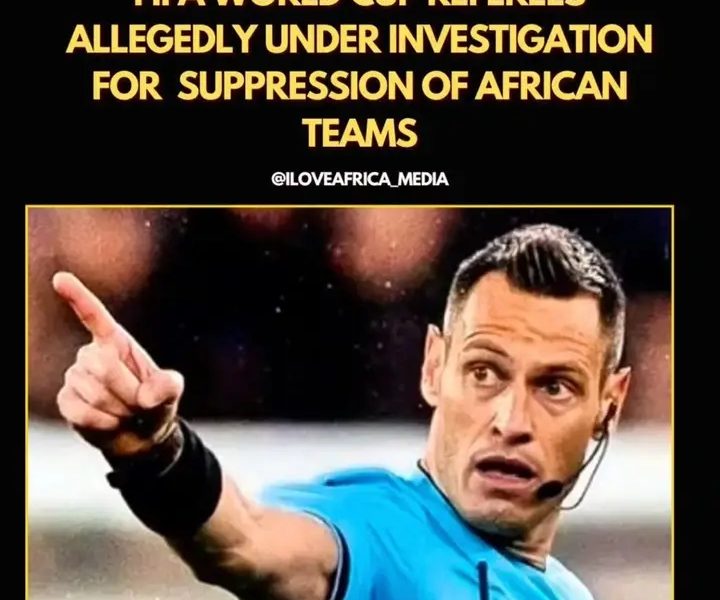
Controversial refereeing decisions at the 2026 FIFA World Cup have reignited long-standing concerns about how African teams are officiated on football’s biggest stage.

Controversial refereeing decisions at the 2026 FIFA World Cup have reignited long-standing concerns about how African teams are officiated on football’s biggest stage.
Players, coaches and supporters from several African nations have questioned a number of decisions made during the tournament, with many arguing that inconsistent officiating has cost African sides crucial results.
The latest debate followed Ghana’s match against England, where the Black Stars were left frustrated after being denied what many believed was a clear penalty. During the second half, Ghanaian forward Prince Kwabena Adu appeared to be brought down inside the penalty area after colliding with England goalkeeper Jordan Pickford.
Although the incident was reviewed by the Video Assistant Referee (VAR), officials decided not to award a penalty, a decision that sparked immediate protests from Ghana’s players and coaching staff.
Speaking after the match, Ghana forward Antoine Semenyo admitted that African teams may need to become more vocal when dealing with referees.
According to Semenyo, teams from Europe and South America often put greater pressure on match officials during key moments, while African sides tend to accept decisions more quietly. He suggested that African players must begin demanding greater accountability from referees if they hope to receive fair treatment in major tournaments.
Ghana coach Carlos Queiroz also questioned the performance of VAR officials, sarcastically suggesting they “went for coffee” during some of the game’s most controversial moments. He insisted the technology exists to eliminate obvious mistakes but argued that it failed to do its job when Ghana needed it most.