HOW THE SUSPECTED ASSASSINATION OF GENERAL SOLOMON MUJURU EXPOSED THE DEADLY SHADOW STATE OF ZANU PF

HOW THE SUSPECTED ASSASSINATION OF GENERAL SOLOMON MUJURU EXPOSED THE DEADLY SHADOW STATE OF ZANU PF
BOOK REVIEW
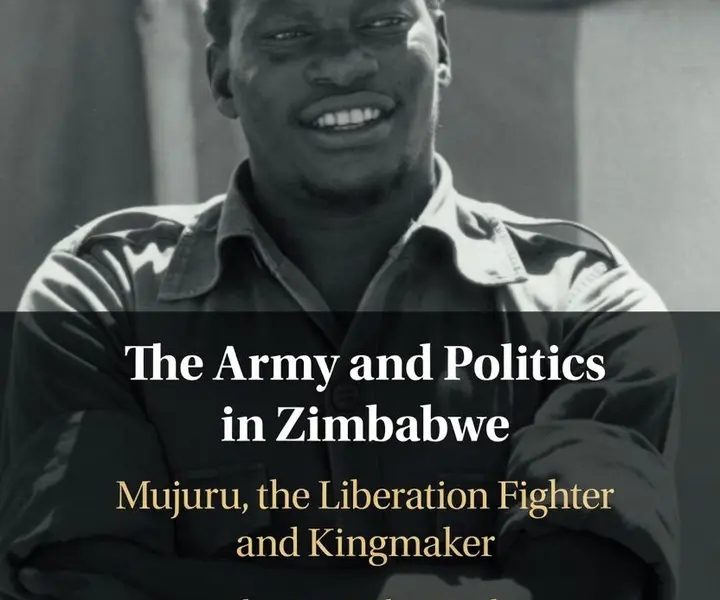
Title: The Army and Politics in Zimbabwe: Solomon Mujuru, the Liberation Fighter and Kingmaker
Author: Blessing-Miles Tendi
Publisher: Cambridge University Press (Cambridge and New York)
Publication Date: 2020 (First published 2020)
Pagination: x + 343 pages, including index and illustrations
ISBN: 978-1-108-47289-0
________________________________
By Gabriel Manyati
On the winter morning of 16 August 2011, Zimbabwe’s ministerial cabinet gathered in the capital city under a heavy, overcast sky. The unenticing weather seemed to mirror the anxious, sombre mood within the government complex. When the country’s long-serving executive leader, Robert Mugabe, arrived approximately 30 minutes late, he delivered an announcement that would forever alter the trajectory of Zimbabwean politics.
He informed the gathered ministers that General Solomon Tapfumaneyi Mujuru, famously known by his liberation wartime nom de guerre Rex Nhongo, had perished in a horrific house fire at his commercial farm in Beatrice. Mugabe added that the general’s body had been burnt beyond any immediate recognition, yet he bizarrely offered no further word regarding an investigation
The news was met with shocked silence by everyone present. When another minister tentatively suggested that the cabinet adjourn out of respect, Mugabe flatly refused, insisting that ordinary business should proceed. Observers were profoundly intrigued by Mugabe’s apparently nonchalant response to General Mujuru’s horrific death.
Other cabinet members present were equally baffled by how quickly and definitively Mugabe concluded, prior to any forensic investigation, that the unidentifiable charred remains were indeed those of Solomon Mujuru, and that he had died strictly as a result of an accidental fire. Mugabe went on to crack jokes during the remainder of the meeting, remaining completely unmoved
This eerie scene serves as the ultimate point of departure for my review of Blessing-Miles Tendi’s seminal historical volume, The Army and Politics in Zimbabwe: Solomon Mujuru, the Liberation Fighter and Kingmaker.
Marking the third instalment for my weekly column, The Sunday Political Read, this magnificent, groundbreaking biography uses the transfixing, eventually tragic life of Zimbabwe’s first black army commander to pierce the corporate veil of a secretive, highly militarised autocracy
.
By analysing the mysterious end of the country’s premier political kingmaker, Tendi provides a panoramic military and political history of Southern Africa, demonstrating that the contemporary state of Zimbabwe cannot be understood through the lens of civilian governance alone; it is a matrix constructed, sustained, and violently reshaped by the shadow of the gun.
Dismantling The Fire State Deception
The final chapter of Tendi’s biography, appropriately titled “Fireborn II,” reads like a high-stakes political thriller, meticulously reconstructing the final hours of the general and the suspicious circumstances surrounding his death. The official state apparatus was remarkably quick to conclude its formal inquest, ruling that the 71-year-old general had accidentally succumbed to smoke inhalation and an out-of-control inferno caused by an unattended candle at his Ruzambo Farm.
However, Tendi leverages his unprecedented access to highly confidential investigative documents, independent pathology assessments, and direct oral testimonies from first-hand witnesses to systematically dismantle the state’s deceptive presentation.
He uncovers a catalogue of inexplicable anomalies: the immediate scene of the fire was severely contaminated by state agents, the police guards deployed from the Very Important Person Protection Unit failed to sound any timely alarm, and private security protocols were flagrantly violated.
Most damningly, the physical positioning of the corpse raised immediate forensic alarms. Mujuru’s lifeless remains were discovered lying face down on top of an unburnt Moroccan rug in a small living room, with his legs spread apart and a portion of his left arm tucked beneath his torso. Blue tongues of fire were observed climbing directly from his heavily charred and ashy frame.
Forensic experts noted that the intense, localised heat required to reduce a human body to ash in that manner was completely inconsistent with a standard domestic wood or candle fire, suggesting the use of professional, military-grade chemical accelerants.
The political motivation for an assassination was immense. In the years leading up to 2011, Solomon Mujuru had transitioned from Robert Mugabe’s ultimate institutional guarantor into his most formidable internal threat. Mujuru had grown deeply disillusioned with Mugabe’s autocratic, decades-long refusal to permit a peaceful leadership transition.
In 2004, Mujuru had masterfully engineered the appointment of his wife, Joice Mujuru, to the vice presidency of ZANU PF. This strategic manoeuvre was executed for the specific purpose of blocking the political ascent of his ambitious business and political nemesis, Emmerson Mnangagwa. By eliminating the powerful general, the deep state effectively decapitated the Mujuru faction, triggering a series of structural realignments that culminated in the 2014 purge of Joice Mujuru and the eventual November 2017 military coup that placed Mnangagwa into the presidency.
The Methodological Power Of Elite Oral Testimony
To reconstruct a life spent in the deepest shadows of liberation politics and intelligence operations, Tendi spent over six years conducting rigorous research fieldwork, compiling approximately 150 unparalleled qualitative, in-depth interviews with political, military, and intelligence elites across Zimbabwe, Mozambique, Zambia, Pakistan, and the United Kingdom.
This represents a profound methodological intervention in the field of African political science. For decades, mainstream academic scholarship has prioritised quantitative, behavioral methods, relying heavily on surveys, regression models, and structural abstractions that frequently reduce complex human history to sterile statistics
Tendi forcefully challenges this paradigm, demonstrating that political history is driven by individual human agency, raw emotion, and personal calculations. He invokes the famous philosophical dictum that reason is the slave of the passions, arguing that one cannot begin to comprehend the brutal survival of ZANU PF without looking closely at the subjective feelings, fears, and personal loyalties of the human actors who controlled the means of violence.
Through relationships of trust built over years, Tendi coaxes remarkably candid disclosures from individuals who had never previously spoken to historians, allowing him to explore themes of elite corruption, secret kinship ties, and intense personal rivalries that are aggressively censored in official state hagiography.
From Rural Deprivation To Urban Sabotage
The early movements of the biography trace Mujuru’s evolution from an unpromising, impoverished childhood in the colonial Chikomba district to the politically charged urban terrain of 1960s Bulawayo. State-controlled media has long peddled a romanticised, flawless narrative of a natural-born revolutionary genius. Tendi shatters this mythology by revealing a nomadic, poorly educated youth whose early life was defined by extreme economic distress.
His older brother recalls that their father possessed a grand total of only two cattle, underlining the family’s severe penury. Solomon was so profoundly attached to these animals that he affectionately named them Black and Hostel. Furthermore, Solomon suffered from a severe speech impediment, a pronounced stutter that caused immense frustration and frequently drove him into violent physical altercations with neighbouring youths who mocked him.
It was within the industrial pressure cooker of Bulawayo, a principal site of urban colonial oppression, that Mujuru’s radical political consciousness was truly forged. Working as an organising secretary for the youth league of the Zimbabwe African People’s Union (ZAPU), a rival liberation movement to ZANU, the young Mujuru operated in the dangerous underbelly of urban sabotage.
Family members note that Solomon would work a regular shift at the Dunlop tyre factory during the day and engage in radical underground politics at night, remaining entirely unfazed when warned of the colonial police.
By Christmas Day in 1967, fleeing an imminent arrest warrant, Solomon staged a daring escape to Botswana. He disguised himself as an impoverished schoolboy, wearing worn-out shorts without shoes, and hitched a ride on a train by pretending to be the son of an ordinary woman traveler. Upon arriving at a liberation training camp in Zambia, he was assigned the permanent nom de guerre Rex Nhongo.
Mujuru later reflected on this total erasure of identity, stating that it was a way of making sure the enemy did not know who you really were and where you came from, and that he was just given the name without choosing it.
The Transnational Crucible Of Exile Politics
A major analytical strength of Tendi’s text is its extensive exploration of the transnational dimensions of the liberation struggle. The war against Ian Smith’s white-settler regime did not occur within isolated national borders; rather, the logistics, ideological training, and elite internal politics of the guerrillas spanned across Communist Russia, Bulgaria, China, Tanzania, and Mozambique.
However, operating from beyond national borders created what Tendi conceptualises as the condition of displacement, an agonising state of exile that generated intense internal friction, paranoia, and vulnerability to host state manipulation.
Tendi provides a vital historical corrective regarding the famous 1974 to 1975 Nhari mutiny within ZANLA, the military wing of ZANU. Official state textbooks have long claimed that the revolt was entirely engineered by external Rhodesian intelligence operatives intent on breaking the liberation movement. Using direct testimonies from surviving commanders, Tendi proves that the mutiny was actually born from genuine, internally generated grievances.
Guerrillas operating at the brutal front lines inside Rhodesia felt profoundly abandoned by the exiled political leadership, who lived in relative comfort in Zambian villas while frontline fighters lacked basic ammunition, clothing, and food. Rex Nhongo found himself caught directly in the middle of this transnational crisis, ultimately playing a primary role in tracking down and capturing the mutiny’s leaders in Mozambique, an event that consolidated the power of the core military command.
The Secret Kinship Of The Kingmaker
The central thesis of this biography positions Solomon Mujuru as the indispensable historical kingmaker who single-handedly directed the leadership trajectory of modern Zimbabwe. In the mid-1970s, Robert Mugabe was by no means the natural or popular choice to lead ZANU PF. He was a largely isolated political actor, viewed with intense suspicion by frontline African presidents such as Samora Machel of Mozambique.
Machel actively detested traditional civilian nationalist politicians and heavily favoured radical, Marxist-ideologue guerrilla commanders. It was Rex Nhongo who utilised his immense, unmatched influence among the young guerrilla forces stationed in the Mozambican camps to fundamentally tip the scales.
Driven by a strict adherence to military hierarchy, and motivated by the closely guarded, secret reality that Mugabe was actually his biological nephew, Mujuru engaged in masterful political manoeuvering. He personally convinced Samora Machel to arrest and detain the radical leadership of the Zimbabwe People’s Army who were actively blocking Mugabe’s path.
Reflecting on this critical historical pivot, Mujuru recounted that he went with Robert to see Samora to ask him to take those people, and Samora agreed that it was good because killing each other was not good. This singular intervention allowed Mugabe to assert total, unchallenged administrative control over ZANU PF between 1976 and 1977, a position of absolute power he would retain for 40 years.
Swagger, Sex, And The Ceasefire Crisis
Tendi writes with refreshing, uncompromised candour regarding the human frailties and moral complexities of his subject during the high-stakes 1979 to 1980 Lancaster House ceasefire negotiations. Following the sudden, highly suspicious death of ZANLA’s legendary military commander, Josiah Tongogara, in a car crash on the eve of the truce, a catastrophic leadership vacuum emerged.
Mujuru immediately stepped into this breach, assuming total operational control and working alongside the British Commonwealth Monitoring Force to ensure the delicate truce held.
The biography brilliantly exposes how the private and public spheres intensely collided during this historical transition. British liaison officers developed an exceptionally close, functional working relationship with Mujuru, observing that the guerrilla commander possessed an undeniable, magnetic swagger.
However, observers also recorded that Mujuru routinely demanded transactional concessions from the British authorities, including the systematic provision of local women for sexual entertainment in exchange for his continued military cooperation. Tendi brilliantly notes that by indulging in these behaviours, Mujuru inadvertently reinforced deep-seated, patronising racial stereotypes held by the departing colonial authorities.
Yet, his fierce, independent authority remained absolute. When white Rhodesian security forces violated the ceasefire by arresting a ZANLA political choir traveling to a rally, Mujuru telephoned British commanders late at night, stating with cold fury that he was going to kill them, a direct threat that caused massive panic in the British command and resulted in the immediate release of the detainees.
The Blood And Splendour Of Post-colonial Command
Upon the formal attainment of independence in 1980, Mujuru was appointed as the first black commander of the newly formed Zimbabwe National Army. His task was monumental: integrating three undefeated, deeply bitter, and historically hostile military forces into a single national structure: ZANLA, ZIPRA, and the white Rhodesian Security Forces.
Tendi gives immense credit to Mujuru for his strict commitment to professionalising the force, introducing rigorous conventional training, and elevating formal academic standards across the officer corps. By 1992, the Zimbabwean military was universally regarded as the second-best conventional fighting force in Southern Africa.
Nevertheless, this era of professional state-building was deeply compromised by mass state-sponsored violence. The early 1980s witnessed the Gukurahundi genocide, during which the North Korean-trained Fifth Brigade systematically slaughtered over 20 000 Ndebele civilians in Matabeleland and the Midlands. Tendi does not sanitise his subject; he explicitly implicates Mujuru in these early human rights atrocities, showing how his aggressive drive for ZANLA primacy directly enabled the systemic persecution, torture, and mass desertion of ZIPRA soldiers.
Concurrently, the book highlights the immense, contradictory pressures Mujuru faced from hawkish civilian ZANU PF politicians who demanded a total ethnic purge of the military. Tendi records a highly dramatic confrontation at the army headquarters where junior ZANLA officers openly revolted against Mujuru’s integration policies, shouting that he was selling out and was wrong, and that ZIPRA must be totally thrown out.
Mujuru stood his ground with immense firmness, insisting that the integrated forces must pull together to prevent the nation from descending into a total civil war.
The Rise Of The Capitalist Deep State
Following his retirement from active military command in 1992, Mujuru entered formal parliament and transformed into a leading member of Zimbabwe’s predatory politico-capitalist elite.
He amassed a massive private empire comprising lucrative commercial farming estates, mining shares, and extensive corporate holdings. Yet, Tendi masterfully balances this portrait of elite capital accumulation by documenting Mujuru’s enduring personal generosity toward his impoverished extended family.
His long-term legal counsel noted that destitute, distant relatives would routinely form long queues outside his private office to receive cash stipends disbursed strictly on the general’s personal instructions.
As the political landscape deteriorated in the late 1990s and 2000s, the rivalry between Mujuru and Mugabe grew increasingly acrimonious. Mujuru fiercely opposed Zimbabwe’s financially ruinous military intervention in the Democratic Republic of Congo war, viewing it as an unconstitutional deployment designed to enrich a small clique of civilian politicians and rival military commanders.
This independent streak drew deep, enduring contempt from civilian party hardliners, most notably Emmerson Mnangagwa. Tendi recounts a telling social vignette from a formal dinner at the Meikles Hotel hosted for visiting German intelligence officials in the mid-1980s. General Mujuru arrived exceptionally late, heavily smelling of Scotch whisky, and completely flouted the mandatory formal dress code by appearing in a casual shirt without a dinner jacket.
Watching the army commander’s flagrant, public disrespect for institutional protocol, Mnangagwa simply shook his head in disgust and muttered to intelligence officials that this was his army commander.
The Legacy Of The Gun
In his final months, Solomon Mujuru was acutely aware that the shadows were closing in. He openly remarked to a political ally in July 2011 that these people had too much power, that he thought of letting go, and that he did not feel safe.
During a final lunch with another close associate, he suddenly mused about his own mortality, stating that when it is time to go we slip away like lions.
Blessing-Miles Tendi has produced an extraordinary, foundational biography that completely reconfigures our understanding of civil-military relations in Africa. The Army and Politics in Zimbabwe is a masterwork of historical reclamation, written with prose that is as beautiful as it is analytically unyielding.
It proves that beneath the public theatre of civilian elections and political rallies lies a terrifying, permanent deep state forged in the fires of the liberation war. For any journalist, political scientist, or international analyst seeking to comprehend the true, opaque mechanisms of power within Southern Africa, this brilliant volume stands as an absolute, indispensable triumph.
#SolomonMujuru #ZimbabwePolitics #BlessingMilesTendi #ZANUPF #MilitaryHistory